
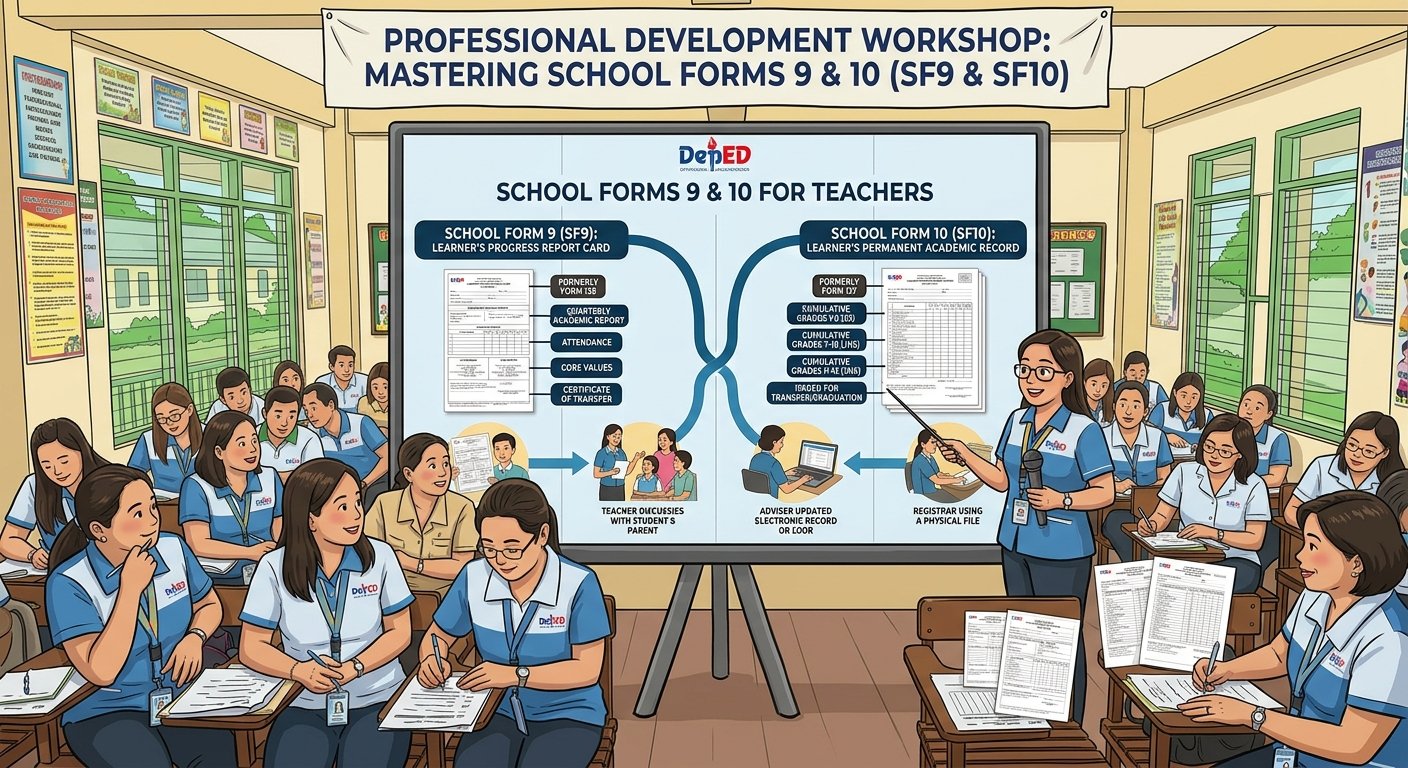
Automated Trimester Version of SF9 and SF10 for JHS MATATAG
Beyond Paperwork: How Modernizing SF9 and SF10 Is Liberating Philippine Educators
For decades, the mere mention of School Form 9 (SF9) and School Form 10 (SF10)—formerly known as Form 138 (Learner Progress Report Card) and Form 137 (Learner Permanent Academic Record)—evoked a familiar sense of dread among Filipino teachers. Late nights spent manually entering grades, calculating averages, using correction tape, and facing the high-stakes pressure of quarterly “checking of forms” have long contributed to severe teacher burnout.
A quiet administrative revolution is underway. Driven by digital transformation, automated templates, and integrated platforms like DepEd’s Learner Information System (LIS), modernizing SF9 and SF10 is transforming these critical records from burdensome obligations into streamlined assets for student success.
The Evolution of SF9 and SF10: From Red Ink to Real-Time Data
Historically, class advisers spent dozens of administrative hours copying grades, attendance metrics, and character evaluations across multiple physical documents. A single clerical error on an SF10 often required re-writing an entire sheet or validating painstaking alterations with official seals.
Today, technological innovations are radically modernizing this workflow:
Spreadsheet & Cloud Automation: Customized Excel-based templates and integrated e-Class Record tools automatically populate SF9 report cards and roll overall marks directly into SF10 permanent records. Built-in cross-validation formulas flag errors instantly, helping teachers achieve near-zero clerical mistakes during audits.
Inter-School Digital Transfers: Rather than relying on physical requests carried by parents, receiving schools can track and request original SF10 records through official system-to-system notifications via LIS—drastically cutting down administrative delays and lost files.
Curriculum Adaptability: With major curriculum updates like the MATATAG rollout, centralized digital updates allow schools to quickly align learning areas in revised SF9 and SF10 formats without forcing teachers to manually reformat historical data.
Key Benefits of SF9 and SF10 Automation for Teachers
Time Reclaimed for Teaching: Automating data transfer between daily grading sheets, quarterly/trimester SF9s, and permanent SF10s eliminates redundant entry. Saved hours can be reinvested into lesson planning, mentoring, and targeted student interventions.
Data-Driven Classroom Insights: Transitioning report cards from static paper to digital formats makes tracking student growth effortless. Teachers can spot learning gaps early, monitor attendance trends, and personalize teaching strategies before a student falls behind.
Stress Reduction: Eliminating manual calculation errors and tedious physical record-keeping directly reduces teacher anxiety during end-of-term form evaluations.
Seamless Student Tracking: Standardized digital formats ensure that when a student transfers across regions or school levels (Elementary to JHS, JHS to SHS), their academic history moves smoothly with them.
Free Download: Automated Trimester SF9 & SF10 Template (JHS MATATAG)
Streamline your class record-keeping today! Download the updated PinoyExcel Automated Trimester SF9 and SF10 Excel Template designed specifically for Junior High School under the MATATAG curriculum.
Modernizing SF9 and SF10 isn’t merely about digitizing paperwork—it’s about restoring balance to the teaching profession. By replacing manual clerical tasks with smart, automated systems, educators are empowered to do what matters most: inspire, guide, and teach.


